Read more about the article The Lack of Controversy Over the Trinity in the First Century Church
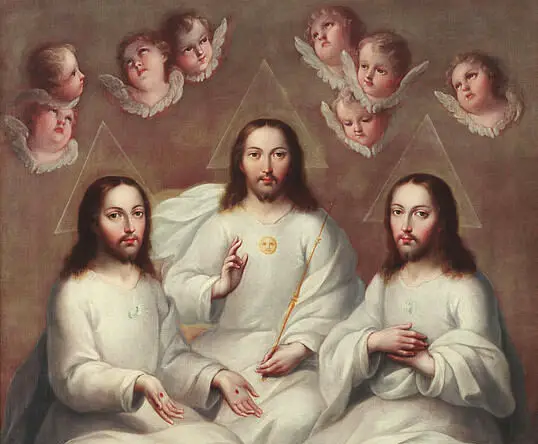
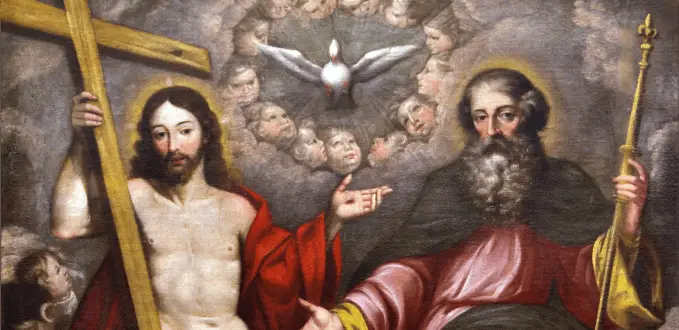
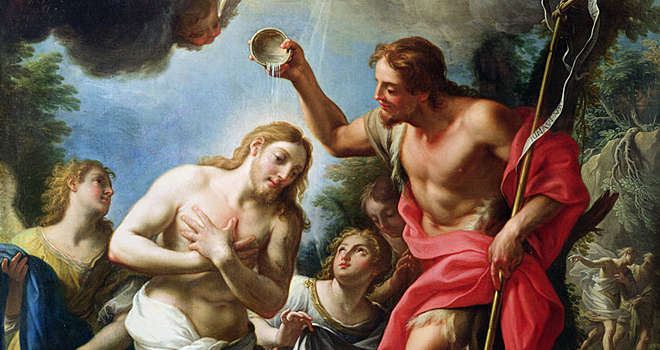
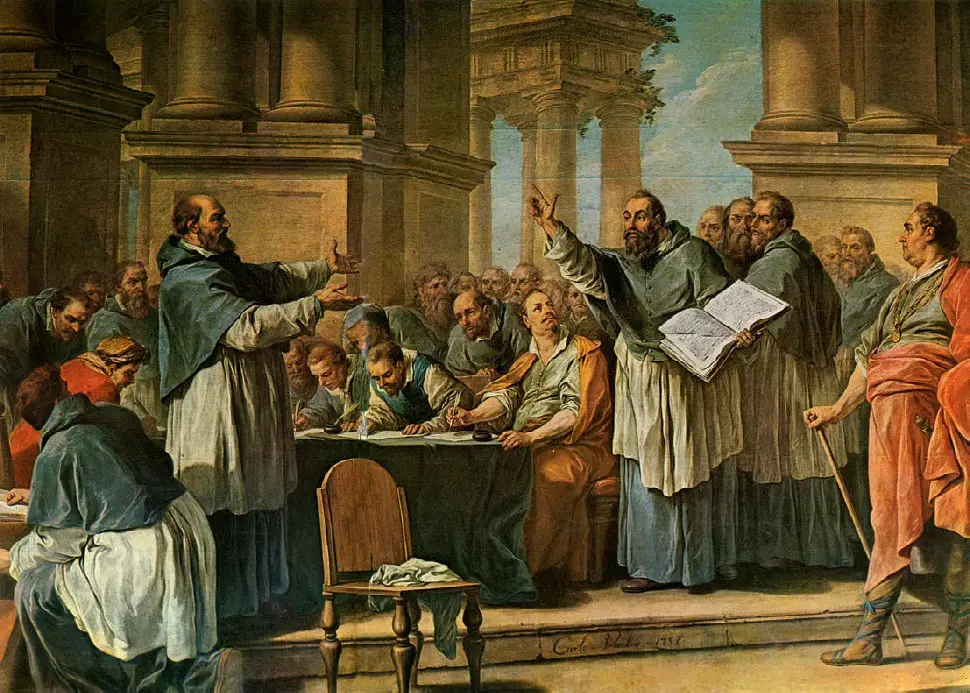
by Charles-Andre van Loo, c. 18th century

The Lack of Controversy Over the Trinity in the First Century Church

That controversies existed among believers in the early Church cannot be denied. Not only did disputes arise between Jewish believers, those first to follow the Jewish Christ, but they also occurred between Jewish believers and Gentiles who had converted to the Way. [1]The types of controversies and conflicts recorded in the Bible vary in nature and degree. For example:The apostles argued among themselves as to who was the greatest. [2]Hellenistic Jewish Christians contended with Hebraic Jewish Christians for neglecting their widows in the daily distribution of…

0 Comments
Read more about the article Sola Scriptura and the Doctrine of the Trinity
The Holy Trinity by Andres Lopez, 1780

Sola Scriptura and the Doctrine of the Trinity

Many Protestant Christians are familiar with the phrase “sola scriptura,” the Latin term that gained prominence during the Reformation movement of the 16th century.  “Sola,” meaning alone and “Scriptura,” referring to Scripture, emphasizes the belief that the Bible is the highest authority for the Christian faith and practice, taking precedence even over long-held Church traditions.[1]Martin Luther, the German-born, Augustinian monk[2] and arguably the best-known of the reformers, came to understand that many of the Catholic Church’s positions contradicted Scripture. When he challenged the Catholic Church’s…

0 Comments
Read more about the article Do You Have to Believe in the Trinity to Be Saved?
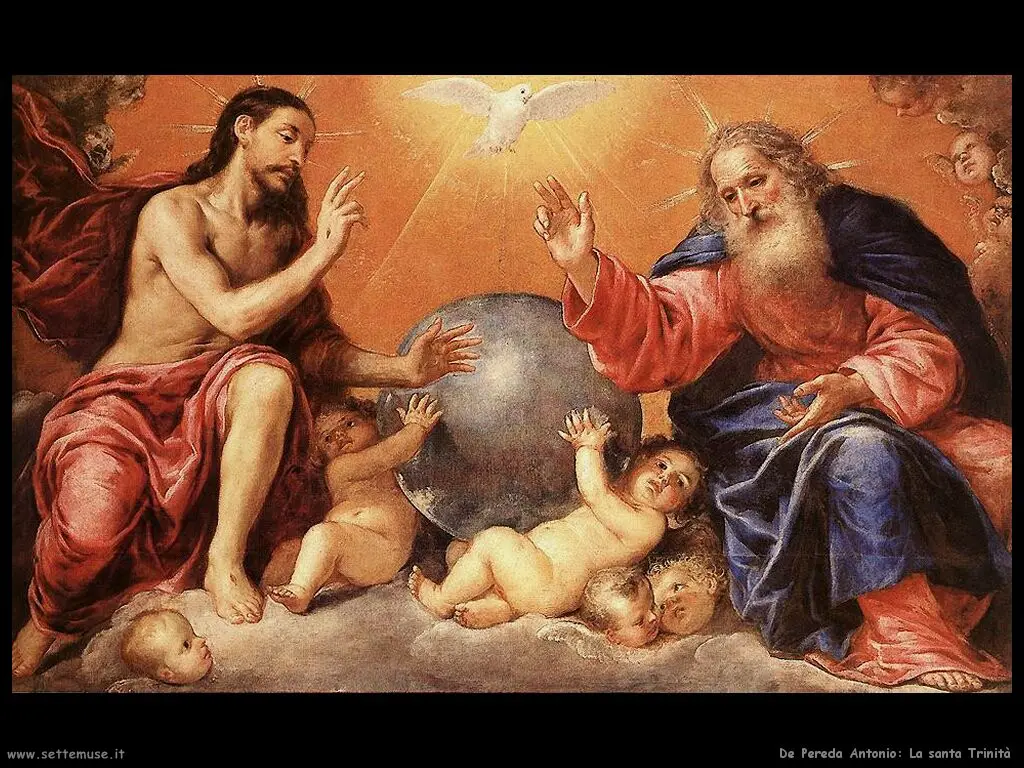
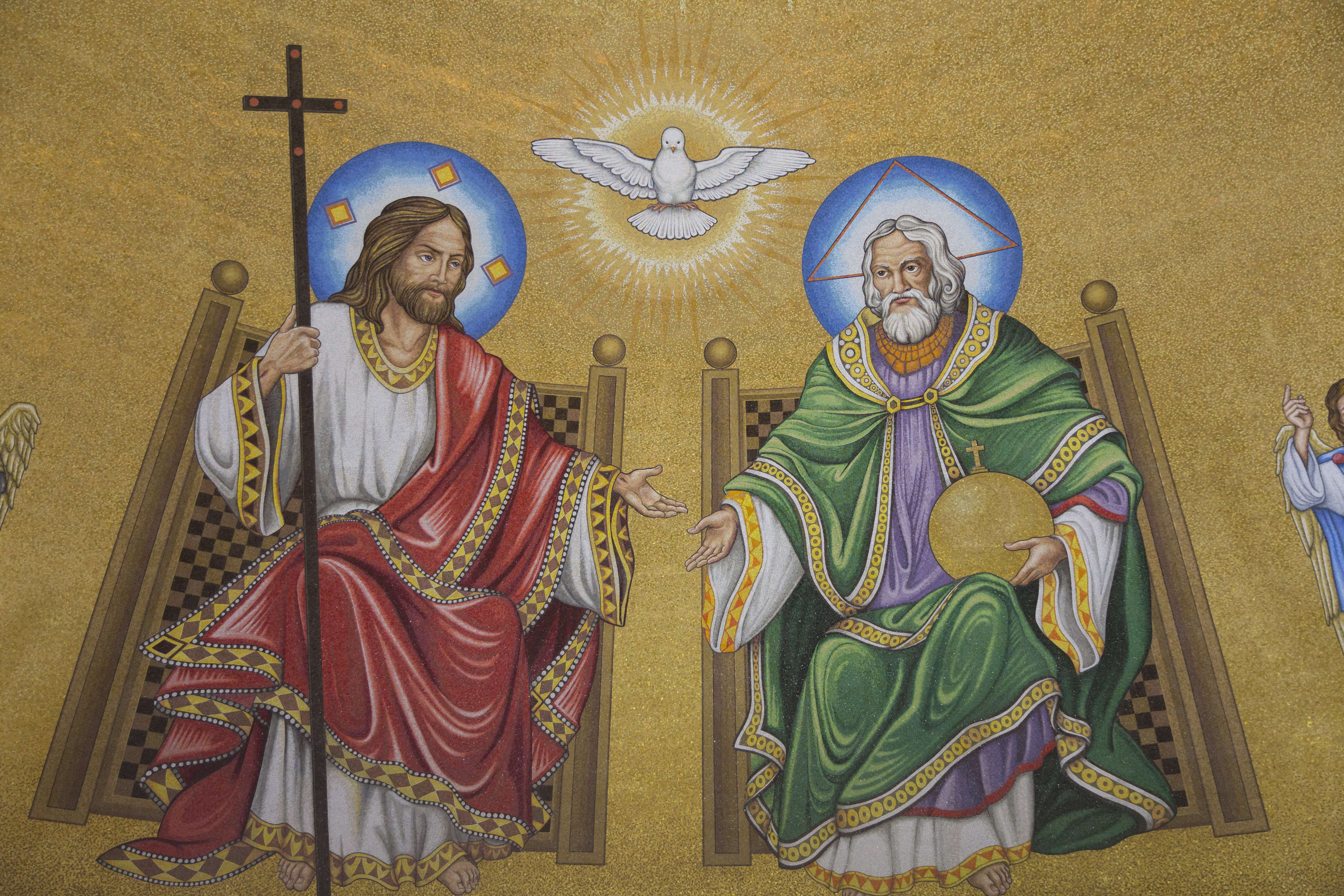
The Holy Trinity by Antonio de Pereda, 17th century

Do You Have to Believe in the Trinity to Be Saved?

What must we believe in order to be saved? According to the fifth century Athanasian Creed, we must believe in the doctrine of the Trinity and the related doctrine of the incarnation of Jesus. The creed states in part:So in everything...we must worship [Father, Son, Holy Spirit] their trinity in their unity and their unity in their trinity.  Anyone then who desires to be saved should think thus about the trinity.  But it is necessary for eternal salvation that one also believe in the incarnation of our…

11 Comments

Father, Son and Holy Spirit: An Examination of 2 Corinthians 13:14

Does Paul's benediction to the church in Corinth constitute proof of the Trinity's existence?  Some would say it does because it lists God (the Father), Jesus and the Holy Spirit: 2 Corinthians 13:14 (NASB) The grace of the Lord Jesus Christ, and the love of God, and the fellowship of the Holy Spirit, be with you all. (emphasis added)Father, Son and Holy SpiritAs we saw in part 1 and part 2 of this series, in order for a passage to qualify as a proof text for…

4 Comments

Father, Son and Holy Spirit: An Examination of Matthew 3:17

A remarkable thing happened after Jesus was baptized by John in the Jordan River: God poured out His Spirit on His beloved Son.   Matthew 3:16-17 (NASB) After being baptized, Jesus came up immediately from the water; and behold, the heavens were opened, and he saw the Spirit of God descending as a dove and lighting on Him, 17  and behold, a voice out of the heavens said, "This is My beloved Son, in whom I am well-pleased." Father, Son and Holy Spirit Many Christians view…

4 Comments

Father, Son and Holy Spirit: An Examination of Matthew 28:19

Does the phrase, "Father, Son and Holy Spirit" provide evidence for the doctrine of the Trinity?  Many Christians believe so.  They cite primarily three passages[1] where the trio of names, or variations thereof, are mentioned in the same context.  In this series, we'll look at each of these proof texts to determine if they do indeed attest to the fourth century doctrine's presence in Scripture.If we're going to discuss the doctrine of the Trinity, we need to know what it states.  Not surprisingly, many Christians…

8 Comments

The Testimony of Singular Pronouns

The Testimony of Singular Pronouns Anyone who has at least a grade school education knows that a pronoun is defined as "a word that takes the place of a noun."[1]  Pronouns, whether singular or plural are not complicated things.  Indeed, child development experts tell us that by the age of "36 months, toddlers have mastered most pronouns."[2]  In Scripture, what do the pronouns used to refer to God tell us about who He is?  Do they support the doctrine of the Trinity which states, in…

3 Comments